Cimiez

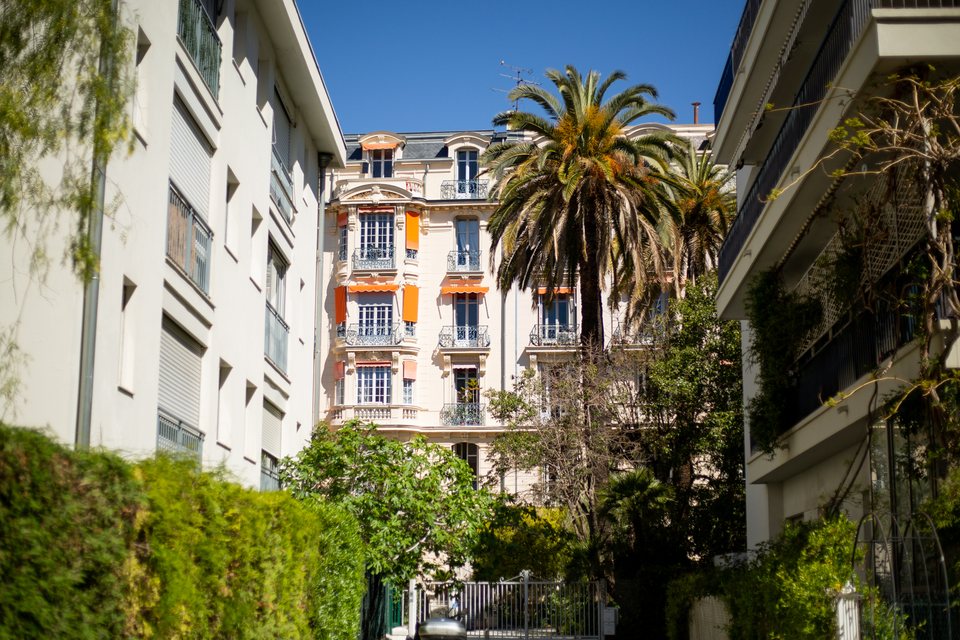
Residential buildings and palms in Cimiez

Cimiez is a large, established residential hill north-east of central Nice. Parks, museums, schools and grand buildings make it family-oriented, while limited local amenities and weaker public transport distinguish it from the city-centre districts.

Find me properties

At a glance

  • Setting: a substantial hill north-east of central Nice
  • Character: quiet, bourgeois and family-oriented
  • Property: modern residences, bourgeois buildings and former palaces
  • Buyer appeal: schools, parks, space and residential calm

Who this area suits

Families and full-time residents who value schools, parks and a quieter neighbourhood—and who are comfortable driving rather than relying on a walkable city-centre lifestyle.

See the advantages and disadvantages

The map shows the extent of Cimiez hill and its position above the city centre.

About Cimiez

One of the oldest areas in the city, the bourgeois residential area of Cimiez is family orientated. Full of parks, museums, and grand old buildings with intricate facades, Cimiez is middle-class suburbia, French style.

The hill of Cimiez sits to the north east of the city centre and is substantially larger than the two other residential hills of Mont Boron and Fabron. Rather than being known for nice views, it is better known for its good schools and excellent local health care with its top notch clinics and hospitals.

A very middle class area with a mix of modern and bourgeois buildings, along with some spectacular Victorian palaces, it is most famous for being in the catchment area of the Stanislas school which was ranked 12th nationally and boasts a 100% high school pass rate. It is not unusual to see a variety of exotic sports cars doing the school run outside the gates.

There is little in the way of amenities up on the hill and public transport links are poor. Though there are some parks with Roman remains, there is very little to do and very few places to go. Residents are largely dependent on driving to go out anywhere.

Lower Cimiez (Bas Cimiez) borders central Nice yet retains the previously stated characteristics of the rest of Cimiez. It is bordered on the west by Boulevard Carabacel and Avenue Desambrois. Property here can be advertised as 10 minutes walk into the city but in reality it is a 10 minute walk steeply downhill and you end up in the wrong part of the city.

All the people that we show property in Cimiez end up buying in the city centre instead. This is why we will no longer carry listings for that area. It is easy to fall in love with a photo, a nice looking building or living room with high ceilings and marble fireplace, however you need to love the area too and in the end most people do not.

History

Founded by the Romans, it was originally built as a rival to the Greek city of Nikaia (Nice), before the two cities merged in 850 AD. Throughout the ages, the well-heeled of the society of the day resided here, which gives an indication of the spectacular features and reputation that Cimiez has.
Cemenelum, as it was called then, was the only Roman fortification in Southern Gaul (modern-day France) at the time. Founded in by Caesar Augustus in 14 BC, it was intended as a major trading centre. It was also equipped with traditional Roman structures such as an amphitheatre, an arena, thermal baths, and a Paleo-Christian Basilica, some of which are still standing today. An archeological museum stands on Cimiez hill, where you can discover the unique characteristics that convinced the Romans of the merits of locating here.

Cimiez monastery (Monastaire de Cimiez) and Cimiez church have been used by the Franciscan monks since the 16th century. The church houses important works by the medieval gothic painter, Louis Brea, who was born in Nice. Also on display here are more than 300 documents and works of art from the 15th to 18th centuries and a monumental alter-piece in carved wood decorated with gold leaf. In keeping with the artistic theme, the winner of the 1937 Nobel Prize for Literature, Roger Martin du Gard, and the painters Henri Matisse and Raoul Dufy, are all buried in the adjoining cemetery.

It was this artistic heritage and natural beauty that lured the British Aristocracy to this area. In the 19th century Cimiez was colonised by fabulous mansions and hotels and used as a winter resort for the wealthy. The magnificent Boulevard de Cimiez is lined with beautiful gardens and villas in a variety of architectural styles from Louis IV to Neo-Gothic to Oriental. Widely held to be the most stunning property in all of Nice, the Excelsior Regina Palace Hotel is a belle-epoque masterpiece where Queen Victoria herself once stayed.

Nice Observatory designed by Charles Garnier, with Gustav Eiffel designing the dome, rests on top of Cimiez hill and can be seen from all of Nice. The world’s largest telescope when it was built in 1888, it lost that title just one year later to the Lick Observatory.

Advantages for a holiday home

  • A quiet and prestigious neighbourhood
  • Modern residences with good size terraces

Disadvantages for a holiday home

  • Away from all the amenities

Advantages for investors

  • Grand buildings in a leafy suburb

Disadvantages for investors

  • Stranded outside the city outskirts
Phillip Temple

Talk through a Cimiez shortlist with Phillip Temple

This is only a guide. For real expert advice please contact Phillip Temple using the button below. He will be happy to give you a free consultation and set you on the path to a successful purchase in Nice.

Optional analytics helps us understand how the website is used. Google Analytics will not load unless you choose “Accept analytics”. You can change this choice later. Learn more