Holiday letting in Nice
Airbnb rules in Nice:
can you rent your apartment?
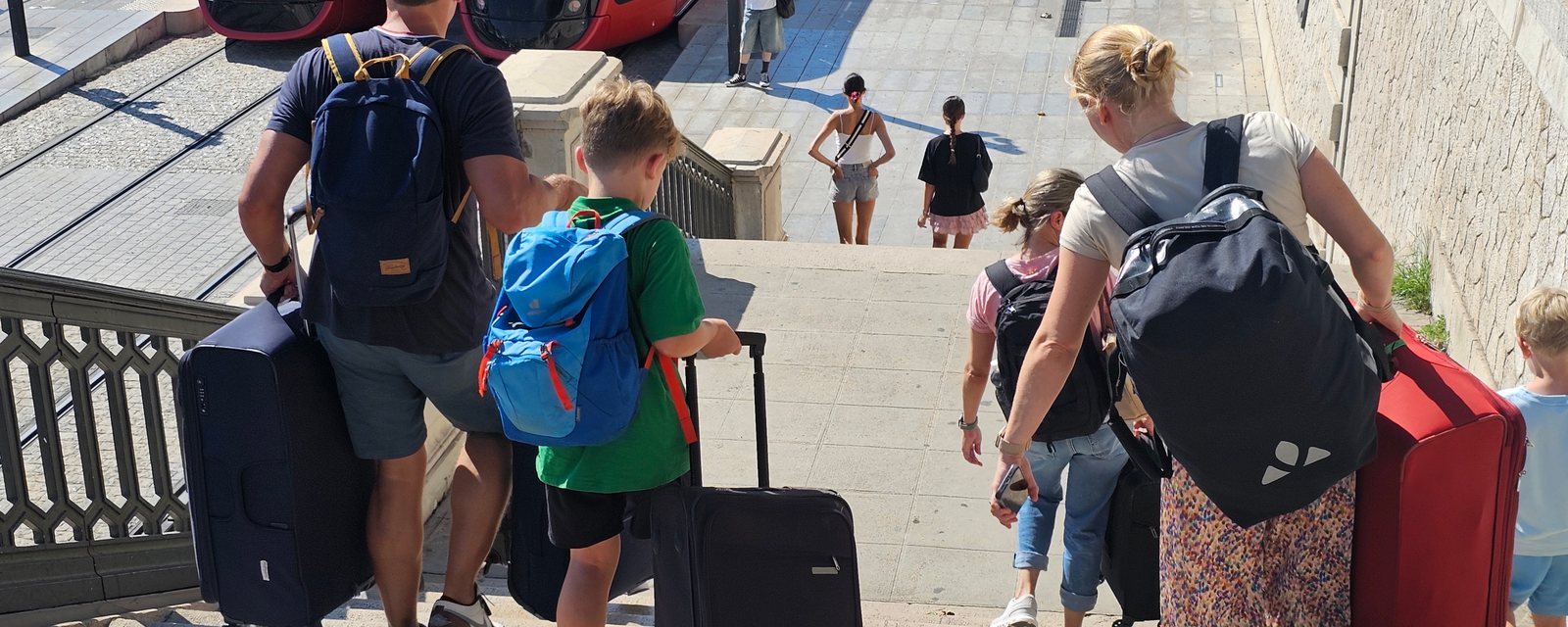
The rules on holiday letting using sites like AirBnb have been changing over the past decade, increasingly so over the past few years. This page is accurate for the time it was written but may not be by the time you read this. Rule changes can be pushed onto the Town Hall web site with no notification to estate agents, Notaires, or to the public at large. The onus is on the property owner to do their due diligence using the latest government publications available. If you need to know the latest then the best thing to do is contact me directly.
What can be confusing is that there are two non-interdependent things you need to be able to rent out an apartment to holiday makers: authorisation from the Town Hall and authorisation from the building rules. In theory you need both. I will come to the in theory part later. I will now deal with each of these two important permissions in sequence.
Change of usage
If you live in France and this is your primary residence then you do not need this and you can rent it out without contacting the Town Hall. However you are restricted to 90 days of holiday rental per year. You do need to declare this income but if you use an accountancy that specialises in "LNMP" and provide the bills then this should normally be almost tax free.
For secondary homes, there are two different ways of getting a "change of usage". You can get a temporary authorisation or a permanent authorisation.
Temporary authorisation
Anybody can apply for temporary authorisation for free with the Town Hall. They do not look at the building rules so it is irrelevant whether AirBnb is allowed in the building or not. This is purely administrative. You supply proof of ownership and they will give you an authorisation number that you have to display at the bottom of every advert for holiday lettings. Many major portals such as AirBnb will prompt you for this authorisation number when you try and register your property. This is valid for 5 years and is non-renewable. It is also non-renewable for other properties so if you buy a new property then you cannot apply for another temporary authorisation. However if the property is sold to somebody else they can re-apply for authorisation in their own name. As of writing, applications are only accepted in February. This may change. Once this temporary authorisation expires then you can move onto permanent authorisation or move to a different rental type.
The Quota system
The previous Mayor, Christian Estrosi, wanted to balance AirBnb throughout the city so that there were not too many buildings that were empty most of the year because of holiday rentals. Therefore he introduced a quota system for what he deemed the 4 most critical areas. This instantly hit legal challenges and is seen unfavourably by the current Mayor, Eric Ciotti. It was still in place in 2026 but it may be phased out.
| Old Town | 47 authorisations |
|---|---|
| City centre (Carre d'Or / Carre d'Argent / Musicians Quarter) | 324 authorisations |
| Port and Mont Boron | 204 authorisations |
| Promenade des Anglais | 116 authorisations |
Taxe de Sejour
There is one in Nice but it is collected automatically on your behalf by the major property portals.
Permanent Authorisation
As you can imagine, this adds a considerable amount of value to the property and you can consequently sell it for a lot more money.
You do not need to buy an office yourself and convert it. Any office being converted anywhere in Nice can have that authorisation transferred to your property. There are middle-men that exist that match up people converting offices to apartment owners wanting to do holiday lettings. There are two rules: it must have always been used as an office since 1970 (or from construction if the building was built after then), and it must be equal or greater in size to the apartment being converted.
Though anybody converting an office can transfer the credits to you, it will not be free. The price is negotiable between buyer and seller. It is a one-for-one transfer: you cannot convert an 80sqm office into an 80sqm apartment, and then convert two 40sqm holiday homes into permanent rental. For this reason the middle-men offer a match-making service so that you do not over-pay for an unnecessary amount of credits.
Your Notaire can take care of the transfer of credits. They will check the office is eligible and that the building rules allow it to become a home, and they will check your building does not forbid holiday lettings.
The building rules
Across most of Nice the building rules were written decades ago before holiday letting sites ever existed. Therefore most do not make any mention of whether owners can host guests for profit. Now new builds are forced to explicitly state in the building rules whether holiday letting is permitted or forbidden. If you have the old rules then generally not being mentioned is implicit authorisation. However it is my understanding that there has been a court case precedent that ruled if you have the clause "for bourgeois living only" in the building rules then the default position is that holiday letting is not allowed in the building.
We are starting to see a trend of residents starting to put onto the AGM (Annual General Meeting) agenda whether to permit or forbid AirBnb in the building. Until recently, to change the building rules required a unanimous vote in favour which made it almost impossible. However a recent law has changed this so that now a two-thirds majority is needed. Interesting side note: even if AirBnb is banned in the building, you can still AirBnb for 90 days if it is your primary residence.
Though we do occasionally see buildings ban AirBnb, anecdotally I have actually seen more proactively voting to explicitly authorise AirBnb. Even if it is not forbidden, this is a good thing to do as in the future it might become a requirement to be able to obtain the 'compensation' mentioned above.
So what happens if AirBnb is banned in the building and somebody does it anyway? In practice it seems not much. First residents would have to build up a comprehensive dossier of evidence, showing nuisance with recordings of a frequency of guests that can only be explained by AirBnb. Then this needs to be registered with the Syndic who will then fire a series of warning letters. If this fails, then the Annual General Meeting will need a majority vote to hire a lawyer and start a court case to get a court injunction. Assuming the case is solid enough then once the judgement is issued, probably after a couple of years in my experience even though it is possible in theory for a judge to fast-track it, then a daily fine will be issued from that day until the order is complied with. So unless there are only a small number of residents or a large group are particularly aggressive against AirBnb, from what I am personally seeing right now the answer is very little.
Should you buy?
Of course the answer is: it depends.
If you have no interest in Nice and this is a pure fire-and-forget investment play to get maximum yield for minimum outlay then probably not. There is legal uncertainty and the rules may continue to evolve over the next decade. Also the current 5 year limit for temporary authorisation will negatively affect your calculations. As will having to recuperate the nearly 8% purchasing costs.
For those that want a holiday home but want to make some money on the side then yes it is still viable. Five years is a long time and you have so many benefits:
- Nice is one of the most solid places in the world to invest, and makes for a relatively liquid asset because it is so easy to sell here
- capital appreciation has historically been very solid and investment continues to pour into Nice
- local taxes and charges are relatively low compared to other cities
- those five years give you a great return before you need to consider your options
- those restrictions are unlikely to get tighter so if they loosen you win out
- once people start getting interested in the compensation then the credits market will grow making a deal easier to find
- from experience, after five years is often around the time many first time buyers think about upgrading, for instance something larger or with a balcony or view
- otherwise the mixed rental (see rental guide) offers a great secondary route
- you can still rent out occasionally after; you need authorisation if the tax authorities see revenue generation as the primary purpose for the asset
- it is a top global destination so you can stay around the world for free in exchange for guests in your apartment, either through personal contact or via exchange web sites
Is the world the easy free-for-all it was when AirBnb started? Not in many cities but it feels to me that Nice has fared a lot better than others. Does it feel unjust being told what you can and cannot do with your own property? Maybe. However the doom and gloom over the strong left-wing parties in France as well as the worry about the hotel lobbying on the French Riviera has not brought the crushing blow to holiday rental that many thought it would. Things are not perfect but I am cautiously optimistic right now. If I had to maintain a certain yield via holiday revenue to make the purchase viable then I probably would not pull the trigger. If this is a hybrid purchase then considering how rapidly Nice is developing and all the new infrastructure project that will come to fruition over the next several years that will boost it even more then yes I would.
This page contains purely my opinions, which may change over the coming years, and may even no longer be valid by the time you read this. You absolutely must act on the latest information around the time you are looking to purchase.

Expert advice for your property
This is only a guide. For real expert advice please contact Phillip Temple using the button below. He will be happy to give you a free consultation and set you on the path to a successful purchase in Nice.